
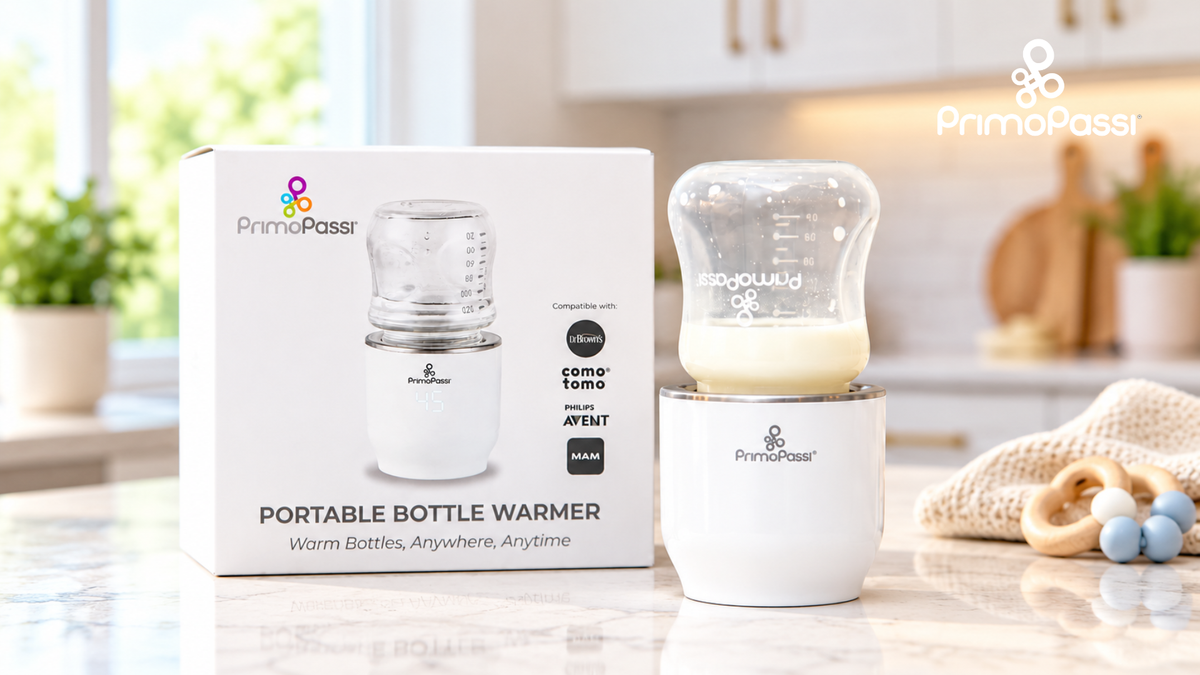
Quick Answer: A portable bottle warmer turns battery power into gentle, controlled heat that passes through the bottle wall and warms the milk evenly, with no microwave, boiling water, or wall outlet needed. The main benefits are even warming without hot spots, USB rechargeable convenience, and easy warm bottles for night feeds, travel, and outings. Warming is optional, since cold or room temperature milk is also safe, so the real value is comfort and convenience. Always test a few drops on your wrist before feeding.
It is 3 a.m., your baby is wide awake and hungry, and the bottle you just pulled out of the fridge is cold. Plenty of babies will drink it that way. Plenty of others will push it away and make their opinion very clear. A portable bottle warmer is built for that exact moment: a small, rechargeable device that brings milk to a comfortable feeding temperature without a trip to the kitchen.
This guide answers the questions parents search for most. How does a portable bottle warmer work? Is it safe for breast milk? Is it worth buying? Do babies even need warm milk in the first place? Along the way you will find the real benefits, a few honest limits, and the safety habits that matter more than any gadget.
How Does a Portable Bottle Warmer Work?
Most portable warmers are built around three parts: a power source, a heating element, and a way to keep the temperature under control. Once you know what each one does, the device stops feeling like a black box.
What powers a portable bottle warmer?
Countertop warmers need a wall outlet. A portable bottle warmer carries its own rechargeable battery instead, which is why it works in a parked car, a hotel room, or on a park bench. The Primo Passi Portable Baby Bottle Warmer charges over USB, so a power bank, a car adapter, or a regular outlet will all do the job.
What does using one look like, step by step?
- Pick the adapter that matches your bottle. The Primo Passi warmer includes three.
- Fit the bottle into the warmer so it sits securely.
- Press the power button.
- Give the heat time to travel into the milk. Cold milk from the fridge takes longer than milk that has been sitting out, and a bigger bottle takes longer than a small one.
- Remove the bottle, swirl it gently, and test a few drops on your inner wrist before feeding.

The Primo Passi Portable Baby Bottle Warmer is compact and lightweight, so it slips into a diaper bag or backpack without taking over the space. It fits most baby bottles and formula containers, which means you do not have to change your bottle brand to use it.
Think of it as a small piece of your feeding setup that travels with you, rather than another appliance that lives on the counter.
Why is a portable bottle warmer gentler than a microwave?
Microwaves heat liquid unevenly. They can leave pockets of much hotter milk inside a bottle that feels only warm on the outside, and those hot spots can burn a baby's mouth. The CDC advises never to thaw or heat breast milk in a microwave, and HealthyChildren.org from the American Academy of Pediatrics gives the same warning for formula and breast milk alike. Excess heat is also a problem for breast milk itself, because it can break down some of the beneficial components that make it valuable.
A portable bottle warmer applies lower, steadier heat across the bottle, so the temperature stays more even from the first swallow to the last.
How Is a Portable Bottle Warmer Different From Other Ways to Warm a Bottle?
You have more than one safe option, and each one fits a different situation.
- Bowl of warm water or warm running tap water: Set the sealed bottle in warm (never boiling) water. It costs nothing and works well, but it needs a sink or kettle, a bit of attention, and some cleanup, and it is awkward away from home.
- Countertop water or steam warmer: Consistent at home, but it needs an outlet and water, so it stays in the kitchen.
- Portable bottle warmer: Cordless, dry, and small enough for a diaper bag. It works anywhere you can set a bottle down.
- Microwave: Not a safe choice for breast milk or formula because of hot spots.
None of these is the only right answer. If nearly all your feeds happen in the kitchen, a bowl of warm water does the job. A portable bottle warmer earns its place when feeds happen in more than one location or at inconvenient hours.
Is a Portable Bottle Warmer Safe for Breast Milk and Formula?
Used correctly, yes. The device is only half of the safety picture, though. These habits matter just as much as the warmer itself:
- Test every time. Sprinkle a few drops on your inner wrist. HealthyChildren.org from the American Academy of Pediatrics says the milk should feel lukewarm. If it feels too warm, wait a moment and test again.
- Aim for body temperature. Breast milk leaves the breast at about 98.6°F, so the goal is closer to that than to a hot drink.
- Swirl, do not shake. Breast milk separates naturally as fat rises to the top. Gentle swirling mixes it back without creating bubbles.
- Warm one feeding at a time. The CDC says to use milk within 2 hours of warming or bringing it to room temperature, and to use leftovers within 2 hours after your baby finishes feeding. Our guide on how long breast milk can stay out breaks the timing down.
- Thaw frozen milk first. Thaw in the refrigerator or in a container of lukewarm water, then use the warmer to bring it to feeding temperature. Never thaw in the microwave.
- Keep everything clean. Wash bottles, nipples, and adapters after use, and wipe the warmer following the manufacturer's instructions.
Do Babies Really Need Warm Milk?
No, and this surprises many parents. The CDC notes that breast milk can be served cold, at room temperature, or warm, and the same goes for formula. Warming is a matter of preference, not a medical requirement.
Still, many babies like it. A breastfed baby is used to milk at body temperature, so a cold bottle can feel like an unwelcome surprise. If your baby takes cold or room temperature milk without fuss, you can skip warming entirely. If your baby turns away from cold bottles, a portable bottle warmer takes the guesswork out of fixing that.
What Are the Benefits of a Portable Bottle Warmer?
Does a portable bottle warmer heat milk evenly?
Even heating is the headline benefit. Steady heat through the bottle wall avoids the hot spots a microwave creates, and the Primo Passi warmer is designed for consistent temperature without overheating. You get a bottle that feels the same from top to bottom.
Can you use a portable bottle warmer without an outlet?
Yes. Because it is USB rechargeable, you can charge it from a power bank, a car adapter, or a wall outlet, then use it cordless. That freedom is what separates a portable bottle warmer from a countertop model.
Does a portable bottle warmer make night feeds easier?
A cold bottle at 3 a.m. often means walking to a bright kitchen, standing at the faucet, and listening to a baby cry while you wait. A charged warmer on the nightstand lets you stay in the dim room and keep the whole feed calm. It pairs nicely with the routine described in our post on building a calmer night feed with a baby night light.

Will a portable bottle warmer fit your bottles?
Bottle shapes vary a lot, which is why adapters matter. The Primo Passi warmer comes with three, and it is compatible with most baby bottles and formula containers. Check that your usual bottle seats snugly before you rely on any warmer, and swap the adapter if it wobbles.
Is a portable bottle warmer good for travel?
It is one of the best reasons to own one. Road trips, grandparents' houses, and long days out all go more smoothly when a warm bottle is ready on demand. If you are packing for a day away, our list of 10 diaper bag essentials is a good companion, and our post on warming bottles while traveling goes deeper on trips.
Can other caregivers use it easily?
A single power button and a built-in heat ceiling mean a grandparent or sitter can get the same result you do. That consistency takes a small worry off your plate when someone else handles a feed.
When Does a Portable Bottle Warmer Make the Most Sense?
- Night feeds: Skip the kitchen trip and keep the room quiet and dim.
- Car rides and road trips: Charge it from a car adapter and warm a bottle at a rest stop.
- Days out: Parks, family visits, and appointments where a warm bottle makes a fussy baby easier to settle.
- Pumping parents on the move: Keep milk cold in an insulated bag until you are ready to feed, then warm only what you need.
- Childcare handoffs: Rules vary, so check with your provider before sending any warmer to daycare.

If you pump, the warmer is only one link in the chain. Primo Passi Breast Milk Storage Bags are pre-sterilized and BPA-free, with a double zipper seal, a wide pour spout, and a write-on label so you can mark the date and volume. Each bag holds up to 8 ounces (250 ml).
Use the oldest milk first, thaw it in the fridge, and bring just one feeding's worth up to temperature when your baby is ready.

Clean equipment matters as much as warm milk. Primo Passi Microwave Steam Sterilizer Bags are BPA-free and reusable for up to 20 uses per bag, with check boxes to track each use. They suit most microwave-safe bottles, nipples, pacifiers, and breast pump parts, and they pack flat for a diaper bag.
Our guide on sterilizing baby bottles at home and on the go explains when sterilizing is worth the effort.
How Do You Choose a Portable Bottle Warmer?
Not every warmer is built the same. These are the features worth checking before you buy:
- Power source: Look for USB rechargeable so it works with a power bank, a car adapter, or an outlet.
- Bottle compatibility: Included adapters make a big difference if you own more than one bottle style.
- Stated temperature limit: A clearly listed heat ceiling tells you the warmer is not designed to run unchecked.
- Size and weight: If it will live in a diaper bag, it should not feel like extra luggage.
- Simple controls: At 3 a.m., one button beats a menu.
- Easy cleaning: A smooth surface you can wipe down saves effort every day.
The Primo Passi Portable Baby Bottle Warmer checks these boxes: USB rechargeable, three adapters, a stated heating limit, and a compact body.
Common Mistakes to Avoid With a Bottle Warmer
- Heating milk in a microwave or adding boiling water to a bottle.
- Skipping the wrist test because the bottle feels fine in your hand.
- Warming more milk than one feeding needs.
- Re-warming the same leftover milk again and again.
- Shaking breast milk instead of swirling it.
- Leaving a warmed bottle sitting out for later.
Final Thoughts: Is a Portable Bottle Warmer Worth It?
A portable bottle warmer is not essential, and babies who take cold milk happily may never need one. For everyone else, it is a small tool that makes feeds calmer: even warmth, no outlet required, and one less thing to figure out at 3 a.m. or on the road. If that sounds like your life, the Primo Passi Portable Baby Bottle Warmer is a practical place to start.
Portable Bottle Warmer FAQ
How does a portable bottle warmer work?
A portable bottle warmer works by using a rechargeable battery to power a small heating element. The heat passes through the bottle wall by direct contact and warms the milk, while the warmer regulates its temperature so it does not overheat. The Primo Passi Portable Baby Bottle Warmer charges over USB and heats up to 113°F (45°C).
Is a portable bottle warmer safe for breast milk?
Yes, when used correctly. Warm only one feeding at a time, swirl the milk instead of shaking it, and always test a few drops on your inner wrist before feeding. The CDC advises against heating breast milk in a microwave and recommends using milk within 2 hours of warming.
How long does a portable bottle warmer take to warm a bottle?
It depends on how cold the milk is to begin with and how much is in the bottle. Milk straight from the refrigerator takes longer than milk that has been sitting at room temperature, and larger bottles take longer than small ones. Check the temperature on your wrist before feeding rather than relying on a timer alone.
Do babies need warm milk?
No. Breast milk and formula can be served cold, at room temperature, or warm, according to the CDC. Many babies prefer warm milk because it is closer to the temperature of milk from the breast, so warming is mostly about your baby's preference.
Can you use a portable bottle warmer with formula?
Yes. A portable bottle warmer can warm both breast milk and formula. Warm only the amount your baby will drink in one feeding, test the temperature on your wrist, and discard any formula your baby leaves behind.
Will a portable bottle warmer fit my baby's bottles?
Most likely. The Primo Passi warmer includes three adapters and is compatible with most baby bottles and formula containers. Before your first feed, seat your bottle in the warmer and swap adapters if it does not sit securely.