
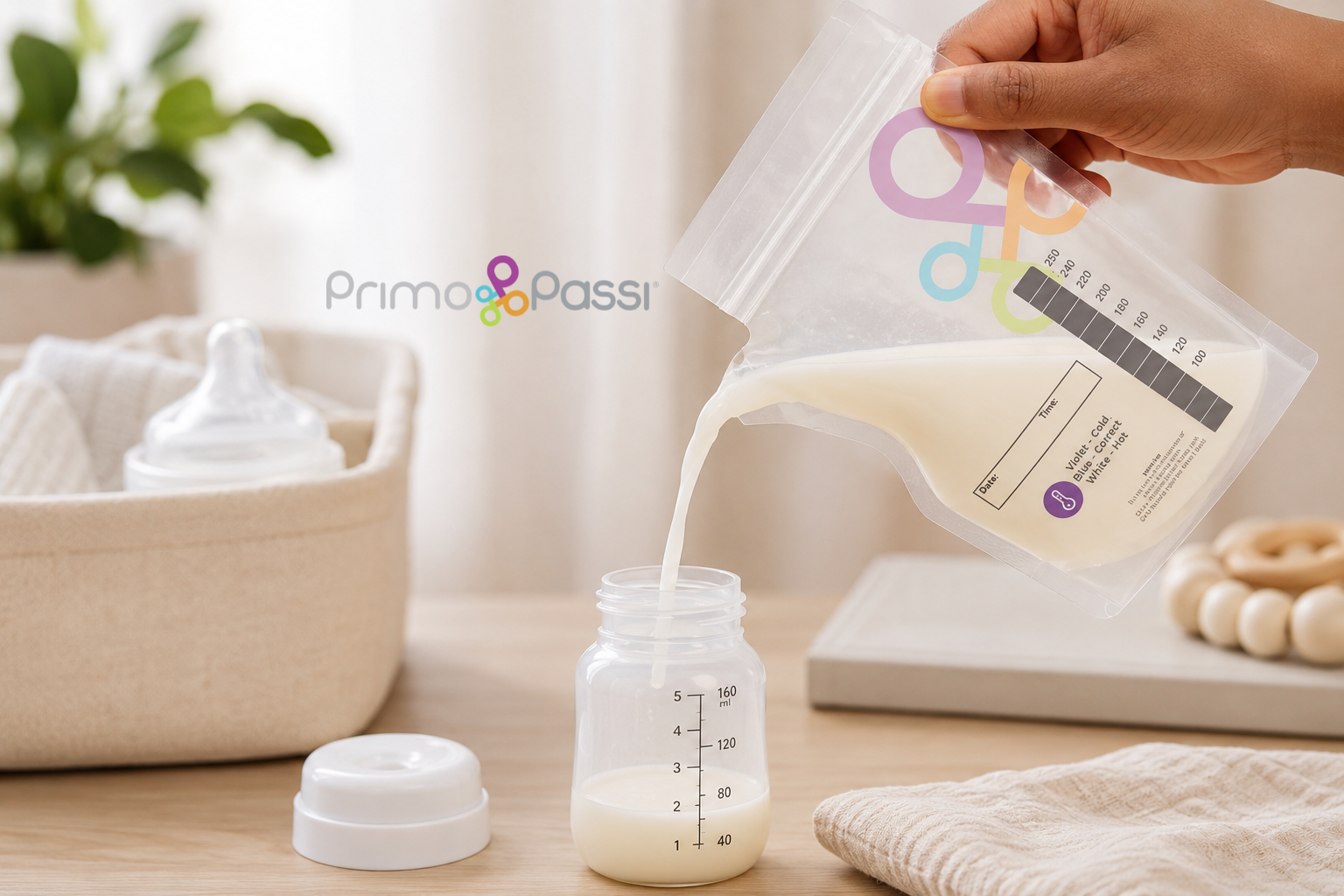
If you have ever stood in front of the fridge at 2 a.m. wondering whether that bottle of pumped milk is still good, you are not alone. Knowing how long breast milk can stay out, refrigerated, or frozen is one of the most common questions new parents search for, and the answer changes depending on where the milk is stored and whether it has already been warmed or offered to your baby.
This guide breaks down the current CDC-backed storage times for breast milk, explains what happens once milk is thawed, and gives you practical ways to keep your stash organized and safe.
How Long Can Breast Milk Stay Out at Room Temperature?
Freshly expressed breast milk can sit out at room temperature, up to 77°F (25°C), for up to 4 hours. If your kitchen or nursery runs warmer than that, it is safer to refrigerate the milk sooner rather than pushing the full 4-hour window.
This guideline comes from the CDC's human milk storage guidelines, which are the standard most pediatricians and lactation consultants reference. The 4-hour window applies to milk that has just been pumped and has not yet touched your baby's mouth.
If you are pumping at work or on the go, a portable double electric breast pump makes it easier to express milk quickly and get it into the fridge or a cooler bag before that clock runs out.

How Long Does Breast Milk Last in the Refrigerator?
Refrigerated at 40°F (4°C) or colder, freshly pumped breast milk stays safe for up to 4 days. Some sources note that milk stored under ideal, consistent conditions can occasionally stretch a bit longer, but 4 days is the number worth planning around.
A few habits help you get the most out of that window:
- Store milk toward the back of the fridge, not in the door, where temperatures fluctuate every time it opens.
- Label each container with the date and time it was pumped.
- Use a fridge thermometer to confirm the actual internal temperature rather than relying on the dial setting.
If you use breast milk storage bags, lay them flat in the fridge or freezer so they stack neatly and thaw evenly later. Pre-portioning into 2 to 4 ounce amounts also cuts down on waste, since you only thaw what your baby will actually finish.

How Long Can Breast Milk Stay in the Freezer?
In a standard combination fridge-freezer at 0°F (-18°C) or colder, breast milk keeps for up to 6 months, with best nutritional quality within the first 3 months. In a standalone deep freezer, it can last up to 12 months.
The type of freezer matters less than the temperature it actually holds. A freezer compartment inside the fridge that regularly gets opened, or one that does not reliably stay at 0°F, will shorten the safe window. If you are building a freezer stash, a small thermometer inside the freezer takes the guesswork out.
When freezing, leave about an inch of headspace in each container or bag, since breast milk expands as it freezes. A wearable pump storage bottle can go straight from pump to freezer without an extra transfer step, which cuts down on handling and mess.

Does It Matter If My Baby Already Drank From the Bottle?
Yes. Once a bottle has been offered to your baby, bacteria from their mouth mixes into the remaining milk. Leftover milk from a feeding should be used within 2 hours of the baby finishing, and after that it is safer to discard it rather than saving it for later.
This is different from milk that was simply warmed but never offered. Once breast milk is brought to room temperature or warmed after being refrigerated or frozen, it should be used within 2 hours, whether or not your baby actually drank from it.
How Long Can Thawed Breast Milk Stay Out or in the Fridge?
Thawed milk follows stricter rules than freshly pumped milk:
- In the refrigerator: use within 24 hours of the milk being fully thawed, not from when you first moved it out of the freezer.
- At room temperature: use within 1 to 2 hours.
- Never refreeze breast milk once it has been thawed.
The 24-hour clock is worth paying close attention to, since it starts the moment the milk is completely liquid, not the moment you pulled it from the freezer to start thawing. If you thaw a bag overnight in the fridge, count the 24 hours from when it finished thawing, which may be several hours after you took it out.
How Should I Store Breast Milk to Make It Last?
A simple system saves a lot of second-guessing at 3 a.m. Here is what works for most families:
- Use breast milk storage bags or hard-sided containers made specifically for milk, not repurposed food containers.
- Portion milk into 2 to 4 ounce servings, or whatever amount your baby typically takes at one feeding.
- Write the date and time expressed on every container, and label with your baby's name if the milk is going to daycare.
- Follow a first-in, first-out system, using the oldest milk first so nothing gets pushed to the back and forgotten.
- Store milk in the back of the fridge or freezer, away from the door.
Pre-labeled storage bags with a write-on strip make the dating step almost automatic, which matters most on the nights when you are running on very little sleep.
What Temperature Should My Fridge and Freezer Be?
For breast milk storage, your refrigerator should hold at 40°F (4°C) or colder, and your freezer should hold at 0°F (-18°C) or colder. These are the same benchmarks used for general food safety, so if your appliances are already set correctly for groceries, they are set correctly for milk too.
A separate fridge or freezer thermometer is more reliable than trusting the built-in display, especially in older appliances. It only takes a minute to check periodically, and it can save you from tossing a stash of milk over a temperature swing you did not know was happening.
Can I Mix Freshly Pumped Milk With Older Milk?
You can combine milk from different pumping sessions, but cool the freshly pumped batch in the refrigerator first before adding it to milk that is already chilled or frozen. Adding warm milk directly to a frozen container can partially thaw the older milk, which shortens its safe storage window.
When combining, label the container with the date of the oldest milk in the mix, since that is the date that governs how long the combined batch is good for.
How Do I Know If Breast Milk Has Gone Bad?
Breast milk naturally separates into layers, with cream rising to the top, and a gentle swirl brings it back together. That is normal and not a sign of spoilage.
Signs that milk may have gone bad include:
- A strong sour or rancid smell
- A noticeably off taste if you test a small amount
- Clumps or an oddly thick texture that does not smooth out when swirled
When in doubt, the safest choice is to throw it out. It is a frustrating waste of a pumping session, but it is not worth the risk to your baby's stomach.
What's the Best Way to Thaw and Warm Breast Milk Safely?
Thaw frozen breast milk using one of these methods:
- Place it in the refrigerator overnight, which is the slowest but gentlest method.
- Hold the sealed container under warm, not hot, running water.
- Place the sealed container in a bowl of warm water for a few minutes.
Never microwave breast milk. Microwaves heat unevenly and can create hot spots that burn your baby's mouth even when the outside of the bottle feels fine. A bottle warmer designed for breast milk brings the temperature up gently and evenly, which is especially useful for late-night feedings when you want a reliable, consistent result without hovering over the stove.

Breast milk does not actually need to be warmed at all. Many babies take it happily straight from the fridge or at room temperature, so warming is a matter of preference rather than a safety requirement.
How Long Does Breast Milk Last While Traveling or On the Go?
When you are out of the house, an insulated cooler bag with ice packs keeps milk at safe temperatures, generally 40°F or cooler, for up to 24 hours. This is especially useful for daycare drop-offs, flights, or long car rides.
Once you get to your destination, transfer the milk to a proper refrigerator or freezer as soon as possible rather than leaving it in the cooler longer than necessary. Pack storage bags flat in the cooler so they chill evenly and take up less space.
Frequently Asked Questions
Can breast milk sit out overnight?
No. Freshly pumped milk should not sit at room temperature for more than 4 hours, and thawed milk should not sit out longer than 1 to 2 hours. Overnight at room temperature is well beyond the safe window for either.
Is it safe to use breast milk that has been in the fridge for 5 days?
The CDC's guideline caps refrigerated storage at 4 days for the best safety margin. Milk at 5 days is past the recommended window, so it is safer to discard it.
Can I refreeze breast milk after it has thawed?
No. Once breast milk has thawed, it should never be refrozen, even if it was never warmed or offered to your baby.
Does breast milk go bad if left out too long?
Yes. Milk left out past the safe window can develop bacterial growth that is not always visible or detectable by smell, which is why the time limits matter even when the milk looks and smells fine.
How long can breast milk stay in a cooler bag with ice packs?
Up to 24 hours, as long as the cooler maintains a temperature of 40°F or cooler throughout.
Do I need to warm breast milk before feeding it to my baby?
No. Breast milk can be served cold, at room temperature, or warmed, based on what your baby prefers. Warming is optional, not required for safety.