
Choosing a breast pump is one of the most personal decisions in a breastfeeding journey. While the goal is always the same, to express milk comfortably and efficiently, the way each parent pumps can look very different depending on routine, body response, and daily demands.
As pumping technology has evolved, parents are now choosing between two main options: wearable breast pumps and traditional electric breast pumps. Understanding the differences between them is not about deciding which one is better overall, but about discovering which one works best for you, at a given moment.
For many parents, the right choice depends on lifestyle, comfort, and flexibility rather than on pump type alone.
What Is a Traditional Breast Pump
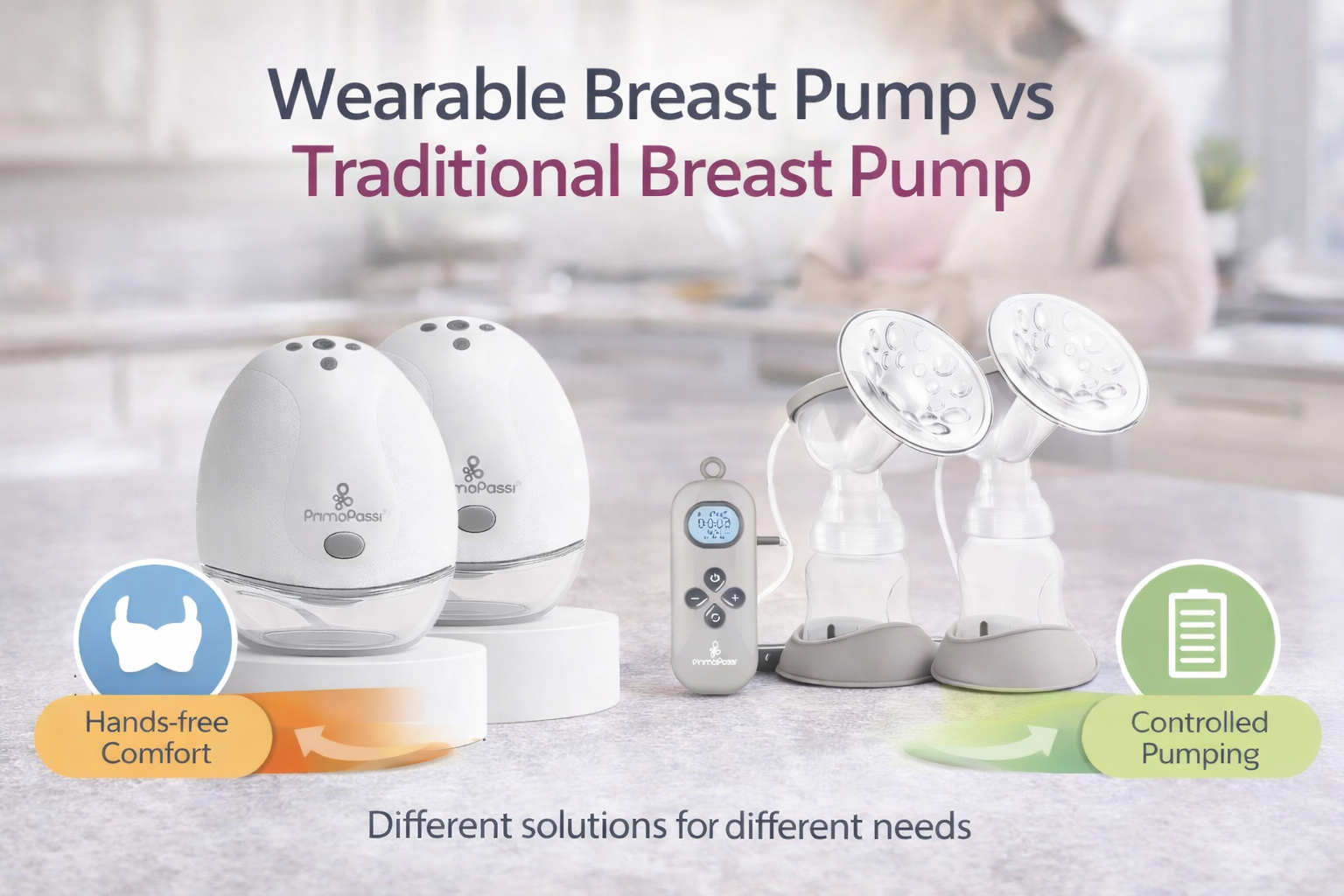
A traditional breast pump typically includes a motor unit connected to breast shields and external collection bottles. These pumps are often used in more structured pumping sessions, whether at home or in a dedicated pumping space.
Traditional pumps are known for offering a strong sense of control. Parents can clearly see milk output, adjust settings easily, and settle into a focused pumping routine. For some, this structure feels reassuring and comfortable, especially during longer sessions or when establishing supply.
Modern traditional pumps are no longer bulky or restrictive. Many portable models now include rechargeable batteries and compact designs, allowing parents to pump comfortably without being tied to a wall outlet.
What Is a Wearable Breast Pump
A wearable breast pump is designed to fit directly inside the bra, without external tubing, dangling bottles, or a separate motor unit. Everything needed for pumping is contained within the device itself.
Wearable pumps are built for flexibility. Parents can move around, work, care for other children, or go about daily tasks while pumping. This hands-free design allows pumping to blend more naturally into everyday life instead of requiring parents to stop what they are doing.
For many parents, wearable pumps reduce the mental and physical interruption that pumping can create.
Mobility and Daily Routines
One of the most noticeable differences between wearable and traditional breast pumps is how they fit into daily routines.
Traditional pumps often encourage parents to pause and focus on pumping. This can be a positive experience for those who value quiet, intentional sessions.
Wearable pumps allow pumping to happen alongside other activities. Parents who have busy schedules or multiple responsibilities often find this flexibility makes it easier to pump consistently.
Neither approach is better by default. They simply support different rhythms of daily life.
Comfort and Body Response
Comfort is highly individual, and breast pumps are no exception.
Some parents respond better to the suction patterns and structure of a traditional pump. Others find wearable pumps more comfortable because of their discreet fit and gentle, rhythmic suction.
Body response can also change over time. What feels best in the early weeks may not be the same months later. This is why having options can be so valuable.
The best pump is the one that feels right for your body, not the one that fits a category.
Suction, Control, and Customization
Traditional breast pumps often offer a very controlled experience. Parents can fine-tune suction levels and modes, and many pumps automatically transition from stimulation to expression based on time or intensity.
Wearable breast pumps also offer adjustable suction and multiple modes, but the experience may feel different because of their compact design and placement inside the bra.
Effectiveness is not only about maximum suction. Consistency, comfort, and regular use all play important roles in milk expression.
Noise and Discretion
Noise level can influence where and when parents feel comfortable pumping.
Traditional pumps may be more noticeable in sound, especially in quiet environments. Wearable pumps are generally designed to operate more quietly, supporting discreet use at work or in shared spaces.
For parents who value privacy and subtlety, this difference can be significant.
Ease of Use and Cleaning
Traditional pumps may include more components, such as tubing, bottles, and connectors. While this allows for customization, it can also mean more parts to assemble and clean.
Wearable pumps are typically designed with fewer components, making setup and cleanup simpler. For parents pumping multiple times a day, ease of use can greatly affect long-term sustainability.
Using Both Pumps at Different Times
For many parents, the decision is not wearable versus traditional. It is wearable and traditional.
Some parents prefer a traditional pump for focused sessions at home and a wearable pump for busy days, work hours, or travel. Others alternate based on how their body feels or how much time they have.
This flexible approach allows parents to adapt pumping to real life instead of forcing life to revolve around pumping.
Two Options Designed for Different Needs
The Primo Passi breast pump collection reflects the understanding that pumping is not one-size-fits-all.
The Primo Passi Wearable Breast Pump is designed for hands-free pumping, offering freedom of movement, quiet operation, adjustable suction, multiple modes, and a compact design that fits comfortably inside the bra.
At the same time, the Primo Passi Portable Dual Charge Electric Breast Pump Special Edition offers a more traditional pumping experience with thoughtful modern features. Its innovative roll-on joystick design, automatic transition from stimulation to suction mode, leak-proof sealing system that does not require sealing rings, built-in rechargeable battery, LCD display, and included baby bottles provide structure, control, and reliability.
Rather than competing, these two pumps support different preferences, routines, and moments in a parent’s day.
Final Thoughts
When comparing wearable breast pumps vs traditional breast pumps, the most important factor is not the category, but the individual using it.
The best breast pump is the one that fits your body, your lifestyle, and your needs right now. For some parents, that means choosing one style. For many others, it means having options and switching as needed.
Pumping should support parents, not restrict them. When parents are given tools that respect their routines and preferences, pumping becomes more manageable, sustainable, and empowering.
And that is what truly matters.
________________________________________________________________________________________________
Frequently Asked Questions About Wearable and Traditional Breast Pumps
What is the main difference between a wearable breast pump and a traditional breast pump?
The main difference is how the pump is used. A wearable breast pump fits inside the bra and allows hands-free pumping while moving or multitasking. A traditional breast pump typically uses external bottles and tubing and is often used during more focused pumping sessions.
Is one type of breast pump better than the other?
Neither wearable nor traditional breast pumps are universally better. The best option depends on individual comfort, body response, lifestyle, and pumping goals. Many parents use both types at different times.
Can I use both a wearable and a traditional breast pump?
Yes, many parents choose to use both. A traditional pump may be preferred for structured sessions at home, while a wearable pump can be useful during busy days, work hours, or travel.
Do wearable breast pumps provide enough suction?
Wearable breast pumps offer adjustable suction levels designed to support effective milk expression while maintaining comfort. Some parents respond better to wearable pumps, while others prefer the feel of a traditional pump.
Are traditional breast pumps uncomfortable or outdated?
No, modern traditional breast pumps are designed with comfort and portability in mind. Many models now include rechargeable batteries, quieter motors, and user-friendly controls that support a comfortable pumping experience.
Which breast pump is better for working parents?
This depends on the work environment and personal preference. Wearable breast pumps offer discretion and mobility, which many working parents appreciate. Traditional pumps may still be preferred during scheduled pumping breaks.
Is noise level different between wearable and traditional pumps?
Wearable breast pumps are generally quieter and less noticeable. Traditional pumps may produce more sound, but many modern designs have reduced noise compared to older models.
How do I know which breast pump is right for me?
The best way to choose is to consider your routine, comfort, and pumping goals. Some parents find that having both options allows them to adapt pumping to different situations and stages.