
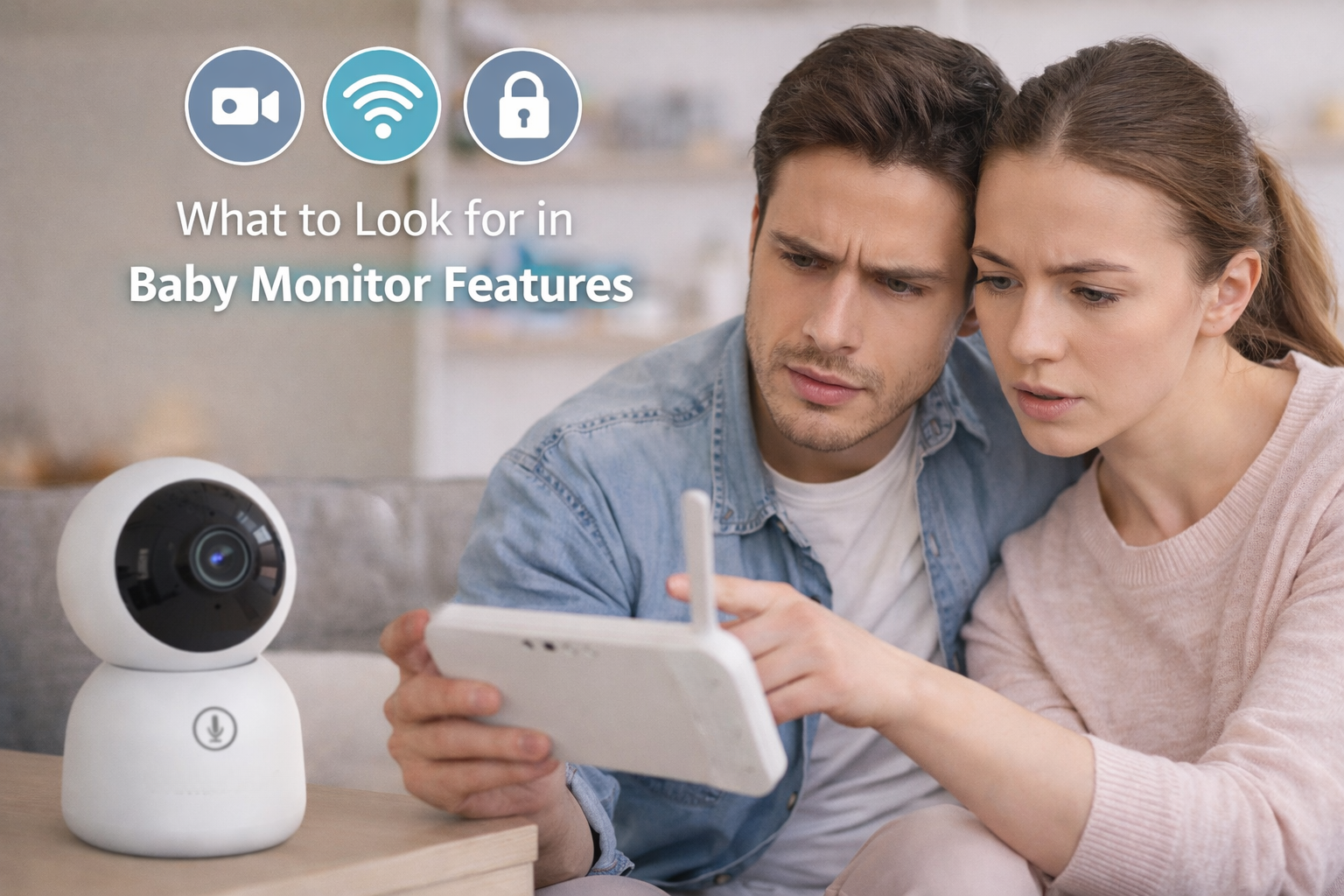
Choosing a baby monitor is one of those decisions that seems simple at first, until parents realize how many options exist. Video or audio. Wi-Fi or non-Wi-Fi. Apps, screens, alerts, sensors, ranges. Suddenly, what should feel reassuring can become overwhelming.
When parents search for what to look for in baby monitor features, they are usually not trying to find the most advanced technology available. They are trying to understand which features genuinely support safety, sleep, and peace of mind in everyday life.
The truth is that the best baby monitor is not the one with the most features, but the one with the right combination of features working reliably when parents need them most.
Why Baby Monitor Features Matter More Than Ever
Baby monitors are often used during the most sensitive moments of parenting. Nighttime sleep. Naps. Illness. Transitions. Moments when parents are tired, distracted, or simply need reassurance.
In those moments, features are not just technical details. They shape how parents feel, how quickly they respond, and how confident they are when their baby is not in the same room.
The right features reduce anxiety and unnecessary interruptions. The wrong ones can add frustration and noise to an already demanding routine.
Understanding what actually matters helps parents choose a monitor that supports them instead of distracting them.
Reliable Audio as a Foundation
Audio monitoring is one of the most basic and essential baby monitor features. Being able to clearly hear a baby cry, move, or call out allows parents to respond quickly and appropriately.
Clear audio without delay or interference is far more important than advanced sound options. Parents should be able to trust that what they hear reflects what is happening in real time.
Even in video monitors, strong audio performance remains a foundation that should never be overlooked.
Video Quality That Provides Reassurance, Not Distraction
For many parents, video monitoring adds an extra layer of comfort. Being able to see a baby’s sleep position, movement, and overall comfort can reduce the urge to constantly enter the room.
Video quality does not need to be cinematic. It needs to be consistent, clear, and reliable, especially in low-light conditions. Lag, freezing, or blurry images defeat the purpose of having a camera at all.
A good baby monitor video feed provides reassurance at a glance, without requiring parents to study the screen.
Night Vision That Works Automatically
Most parents rely on their baby monitor the most at night. Automatic night vision is therefore one of the most important features to consider.
A monitor should transition seamlessly between day and night without manual adjustments. Parents should not need to think about settings when they are half asleep.
Effective night vision allows parents to check on their baby without turning on lights or disturbing sleep, preserving rest for everyone in the household.
Stable and Secure Connection
Security and stability are non-negotiable baby monitor features.
A stable connection ensures that audio and video are uninterrupted, even as parents move around the house. A secure connection protects a family’s privacy and prevents unauthorized access.
Parents should feel confident that their monitor is private, reliable, and free from interference. Peace of mind is impossible without trust in the connection itself.
Works With or Without Wi-Fi
One of the most valuable features in modern baby monitors is the ability to work both with and without Wi-Fi.
Wi-Fi connectivity allows parents to check on their baby remotely through a mobile app. This is useful for travel, workdays, or moments away from home. However, internet connections are not always stable.
A baby monitor that continues to function without Wi-Fi through a direct, secure connection ensures continuous monitoring during outages or in environments with weak internet. This hybrid approach offers flexibility without sacrificing reliability.
For many families, this feature alone becomes a deciding factor.
Range That Fits Real Homes
A baby monitor should work wherever parents need it to work. That includes bedrooms, living areas, kitchens, outdoor spaces, and multi-level homes.
Long and consistent range matters more than maximum advertised distance. A reliable signal throughout the home allows parents to move freely without worrying about dropped connections or missed sounds.
Two-Way Audio for Comfort
Two-way audio allows parents to speak to their baby from another room or through an app. A familiar voice can often soothe a baby without immediate physical presence.
This feature supports emotional connection and can reduce unnecessary disruptions, especially during naps or nighttime sleep. Clear and responsive audio makes two-way communication feel natural rather than frustrating.
Alerts That Support, Not Overwhelm
Smart alerts are designed to notify parents when attention is needed, not to demand constant monitoring.
Sound-activated alerts allow the monitor to remain quiet when everything is calm and alert parents only when something changes. This helps reduce screen time and allows parents to rest more comfortably.
The best alerts feel supportive and accurate, not intrusive or overly sensitive.
Temperature Monitoring for Comfort
Room temperature plays an important role in sleep quality and comfort. A baby monitor that tracks nursery temperature adds another layer of reassurance.
Temperature alerts help parents respond quickly to changes without constantly checking the room. This feature works quietly in the background but provides meaningful peace of mind, especially during seasonal transitions.
Ease of Use in Everyday Life
No feature matters if the monitor is difficult to use.
Parents should look for baby monitors that are intuitive to set up, simple to operate, and easy to understand. Controls should feel natural, not confusing. Menus should be clear, not overwhelming.
The best baby monitor features are the ones parents barely notice, because they work exactly as expected.
Features That Adapt as Children Grow
A baby monitor should not feel obsolete after a few months.
As babies grow into toddlers, the way parents use monitoring often changes. Video may become less important. Audio alerts may take priority. Monitoring may shift from constant viewing to occasional check-ins.
Features that adapt to different stages make a baby monitor useful for longer, rather than something parents feel they quickly outgrow.
A Balanced Example of Thoughtful Features
The Primo Passi Smart Baby Monitor reflects many of the features parents should prioritize.
It combines clear audio and video, automatic night vision, two-way communication, temperature monitoring, and long-range performance. Parents can monitor locally without Wi-Fi using a dedicated parent display or remotely when Wi-Fi is available.
This flexibility allows families to use the monitor in ways that match their routines, rather than forcing a single approach.
Final Thoughts
Knowing what to look for in baby monitor features helps parents make confident and informed decisions.
The best baby monitor is not defined by trends, marketing claims, or feature overload. It is defined by reliability, clarity, flexibility, and trust.
When a monitor quietly supports parents, reduces anxiety, and adapts naturally to daily life, it is doing exactly what it was designed to do.
That is what truly matters.
_______________________________________________________________________________________________
Frequently Asked Questions About Baby Monitor Features
What are the most important baby monitor features to look for?
The most important baby monitor features are reliable audio, clear video, a stable and secure connection, and night vision that works automatically. Features that reduce anxiety and support daily routines matter more than advanced options that are rarely used.
Do baby monitors need Wi-Fi to work properly?
Not all baby monitors need Wi-Fi. Some monitors work through a direct, secure connection between the camera and the parent unit. Monitors that work both with and without Wi-Fi offer greater flexibility and reliability, especially during internet outages.
Is video monitoring better than audio-only monitoring?
For many parents, video monitoring provides additional peace of mind because it allows them to see their baby’s sleep position and movement. However, strong audio monitoring remains essential, and some parents rely more on sound alerts as their child grows.
How important is night vision in a baby monitor?
Night vision is one of the most important features in a baby monitor. Parents use monitors most during nighttime sleep, and effective infrared night vision allows them to check on their baby without turning on lights or disturbing rest.
What kind of range should a baby monitor have?
A baby monitor should have a stable range that works throughout the home, including different rooms or floors. Consistent performance is more important than maximum advertised distance, as reliability builds trust.
Are smart alerts useful in baby monitors?
Smart alerts can be very useful when they are accurate and not overly sensitive. Sound-activated alerts help parents stay informed without needing to constantly watch the screen, allowing for better rest.
Does temperature monitoring really matter?
Temperature monitoring adds an extra layer of reassurance by helping parents maintain a comfortable sleep environment. Alerts can be especially helpful during seasonal changes or overnight temperature fluctuations.
Can baby monitor features adapt as a child grows?
Yes, many parents adjust how they use baby monitor features over time. As children grow, monitoring often shifts from constant viewing to occasional check-ins or sound alerts, making flexibility an important feature.