
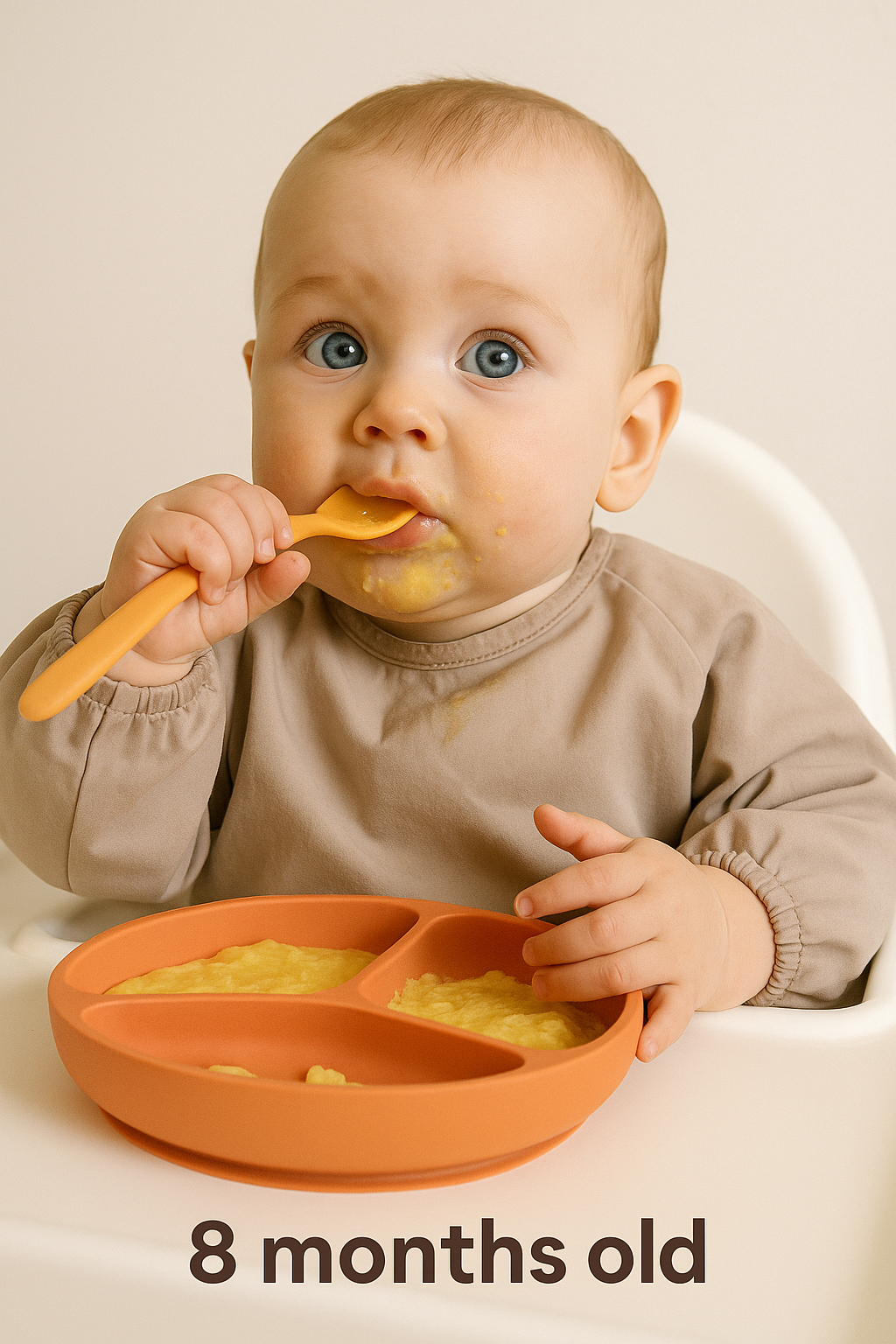
Introducing solid foods is one of the most meaningful milestones in a baby’s first year. It is a stage filled with curiosity, new flavors, soft textures, tiny messes and a whole world of discovery. Alongside all the joy, parents also face a common question: what baby foods to start with.
Although general recommendations exist, every baby is unique. Readiness, development, appetite and interest vary from child to child. That is why the most important starting point is simple: always talk to your pediatrician before introducing solids. Your doctor understands your baby’s growth and history and can help confirm whether your child is truly ready.
Another important principle is to offer a wide variety of foods, including foods your family does not usually eat. Babies benefit enormously from early exposure to different tastes. This helps develop a richer palate, reduces picky eating later in childhood and supports a healthier lifelong relationship with food.
This guide will walk you through readiness signs, the best first foods, preparation methods, feeding styles and practical tools that make this stage easier for parents.
1-Is Your Baby Ready for Solids
Most babies show readiness around six months, but age alone is not enough. Look for these signs.
Your baby can sit with minimal support.
Head and neck control are stable.
They show interest in your meals.
They bring objects to their mouth.
They have lost the tongue thrust reflex.
They coordinate hand to mouth movement.
If your baby has not shown all of these signs, it is better to wait. Starting solids too early increases the chance of choking, discomfort and food refusal. When in doubt, talk to your pediatrician.
2-What Baby Foods to Start With
There is no single correct first food. Babies can begin with fruits, vegetables, iron rich foods, grains or a combination of all these foods.
The key is to offer safe textures, real minimally processed foods, plenty of variety and iron rich choices early on. It is also helpful to include foods that your family does not usually eat so your baby can explore a wide range of flavors.
Below are the categories most recommended by feeding specialists.
2.1 Fruits as First Baby Foods
Fruits are naturally soft and mild in flavor, making them easy for babies to try.
Banana
Avocado
Papaya
Mango
Soft pear
Steamed apple
Melon
2.2 Soft Vegetables for a Nutritious Start
Vegetables help babies experience savory flavors early in life.
Sweet potato
Pumpkin
Carrot
Zucchini
Cauliflower
Broccoli
Chayote
Parsnip
Steam vegetables until very soft so babies can mash them easily with their gums.
2.3 Iron Rich Foods
Iron is essential for brain development and becomes especially important after six months.
Ground beef cooked until very tender
Shredded chicken
Fully cooked egg
Lentils
Beans
Iron fortified oats
Many pediatricians encourage offering iron rich foods from the beginning.
2.4 Grains and Soft Carbohydrates
Soft grains and starches provide energy and pair well with vegetables and proteins.
Oats
Rice
Quinoa
Polenta
Mashed potatoes
Mashed yams
3-Preparing Baby Foods Safely
Texture matters more than flavor in the beginning. Foods should be soft enough to squash easily between your fingers, moist and easy for babies to move around in their mouths. For baby led weaning, offer foods in large graspable pieces.
A helpful rule is that if you can gently mash it, your baby likely can too.
4-Practical Tools That Make Feeding Easier
Introducing solids is not only about food choices. It is also about creating a calm, safe and functional space for feeding. The right tools can support independence and reduce stress for both parents and babies.
Below are examples of tools that help families during this stage.
Supporting Independence with the Primo Passi Suction Bowl Feeding Set
Self feeding is a learning process and babies often drop or push food off the table as they explore. A suction bowl can help make this process easier. The Primo Passi Suction Bowl Feeding Set stays firmly in place and allows babies to focus on exploring food instead of chasing the bowl.
It includes a suction bowl, a fork, a spoon, a lid for storing leftovers, tall curved sides that make scooping easier and dishwasher safe materials. Many parents appreciate having a stable bowl during early feeding stages because it keeps meals more organized and reduces frustration.
Gentle Starts with the Primo Passi Silicone Spoon Pack
When starting with mashed foods or purees, many parents prefer soft silicone spoons that feel gentle on a baby’s mouth. The Primo Passi Silicone Spoon Pack offers ultra soft silicone, long ergonomic handles and the right length to reach the bottom of food jars. They help create a positive and comfortable first feeding experience.
Managing the Mess with the Primo Passi Bandana Bibs
Mealtime can be wonderfully messy. Bandana style bibs are comfortable, absorbent and keep clothes dry during feeding. The Primo Passi Bandana Bibs use soft cotton in the front and fleece on the back to soak up drool and food drips. They have an adjustable closure and fit babies from zero to nine months. They make everyday feeding more comfortable for both parents and babies.
Checking Food Temperature Safely with the Primo Passi Non Contact Thermometer
When serving warm foods like purees, soups or reheated leftovers, it is important to make sure the temperature is safe for the baby. A non contact thermometer allows parents to check the temperature quickly without touching the food. The Primo Passi Non Contact Thermometer can measure the temperature of baby food, bottles or warm water in just one second. This adds an extra layer of safety, especially when babies are just beginning solids and have more sensitive mouths.
5-Feeding Methods
Families can choose between purees, baby led weaning or a mixed feeding approach.
Purees involve spoon feeding soft mashed foods.
Baby led weaning allows babies to self feed with soft finger foods.
Mixed feeding combines both methods and is very common among parents.
6-Foods to Avoid in the First Year
Avoid honey, added sugars, excess salt, whole nuts, whole grapes, hard round foods, cow’s milk as a drink and processed foods. Talk to your pediatrician about allergenic foods and safety guidelines.
7-Why Variety Matters
Exposure to many different flavors early in life helps reduce picky eating and encourages a healthier relationship with food. Offering foods your family does not usually eat expands your baby’s palate and enriches their nutrition.
8-Sample First Week Menu
Day one: banana and broccoli
Day two: pear and sweet potato
Day three: avocado and lentils
Day four: apple and ground beef
Day five: papaya and oats
Day six: mango and egg
Day seven: repeat favorites and try one new vegetable
Understanding what baby foods to start with does not need to feel overwhelming. With guidance from your pediatrician, a variety of nutritious foods, safe textures and practical tools that support independence, you can help your baby develop a joyful and healthy relationship with food.
This stage is not only about nourishment. It is about discovery, connection and building habits that will support your child throughout life.