
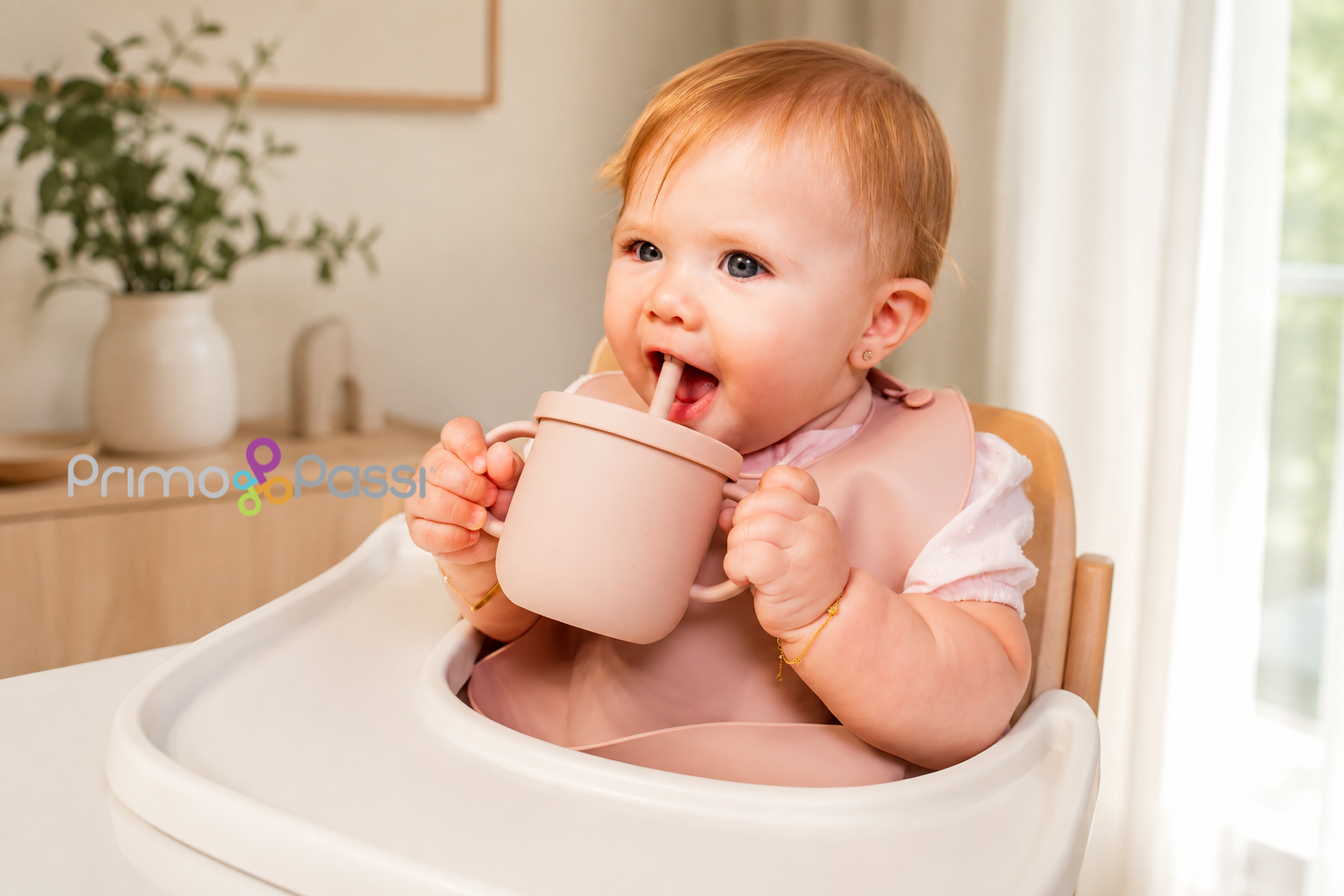
Wondering when to start the bottle-to-cup transition? The short answer is earlier than most parents expect. Pediatricians recommend offering a cup around 6 months, right when solid foods start, even though full independence from the bottle usually doesn't happen until closer to 12 to 18 months.
The gap between "introducing a cup" and "dropping the bottle completely" is where most of the actual work happens. This guide walks through the timeline, the cup types that make the switch easier, and what to do when your baby pushes back.
When Should You Start Transitioning From Bottle to Cup?
The American Academy of Pediatrics recommends offering a cup around 6 months, which typically lines up with the start of solid foods. This doesn't mean the bottle disappears overnight. It means your baby starts practicing a new skill alongside the one they already know.
Most pediatricians recommend weaning off the bottle entirely between 12 and 18 months. Starting the cup habit at 6 months gives your baby a full 6 to 12 months of low-pressure practice before the bottle needs to go away for good.
Why Does the Bottle-to-Cup Timeline Matter?
Prolonged bottle use past 18 months is linked to a few concrete issues, not just a preference from pediatricians. Extended contact between milk and teeth increases the risk of early childhood cavities, sometimes called baby bottle tooth decay, especially when a bottle is used at bedtime.
Sucking on a bottle also relies on an immature swallow pattern. As your baby's mouth and speech muscles mature, moving to a cup encourages the same tongue and swallow mechanics used for talking and eating table food. Waiting too long can make the switch harder, since older toddlers tend to get more attached to the bottle, not less.
What Type of Cup Should You Start With?
Cup type matters more than most parents realize. Broadly, there are three stages:
- Spouted (sippy) cups: A gentle first step around 6 months, since the spout feels somewhat familiar after bottle nipples.
- Straw cups: Often introduced around 9 months. Straw drinking uses stronger tongue and cheek muscles, which many speech-language pathologists prefer over prolonged spout use.
- Open cups: The end goal, usually mastered gradually between 12 and 18 months with practice and plenty of spills along the way.
Buying a separate cup for each stage gets expensive and clutters your cabinet fast. A silicone training cup with interchangeable lids solves this by covering the spout, straw, and open-cup stages with one base, so your baby gets used to the same shape and grip the whole way through.

How Do You Introduce the First Cup?
Start small and low-pressure. Offer 1 to 2 ounces of water in a cup during a meal, once your baby is sitting well in a high chair and can bring objects to their mouth on their own. There's no need to replace a full bottle feeding right away.
A few things that make this first stage go smoother:
- Offer the cup when your baby is calm and moderately hungry, not overtired or upset.
- Expect spills. A shot-glass amount of liquid limits the mess while your baby figures out tilting and sipping.
- Keep the same cup around for a few weeks before switching styles, so your baby has time to build comfort with it.
A spouted cup like the Primo Passi sippy cup with handles gives small hands something easy to grip during these early practice sessions, which helps some babies feel more in control of the process.

What If My Baby Refuses the Cup?
This is extremely common, and it usually isn't a sign that something is wrong. Babies get attached to the comfort and familiarity of the bottle, and pushing back against a new cup is a normal response to change, not defiance.
A few strategies that tend to help:
- Offer the cup at the start of a feeding, when your baby is hungriest and most motivated to figure it out.
- Try a different liquid in the cup, such as water instead of milk, so refusal isn't tied to taste.
- Let an older sibling or a caregiver demonstrate drinking from a cup. Babies often copy what they see.
- Take a short break and try again in a week or two if frustration is building on both sides.
Most babies improve noticeably within a few weeks of consistent, low-key practice. A sudden switch tends to backfire more than a gradual one.
How Do You Know Your Baby Is Ready to Drop the Bottle Completely?
A few signs suggest your baby is ready to move away from the bottle for good:
- They can drink most or all of a feeding from a cup without major spills.
- They show interest in holding and using the cup independently.
- Bottle feedings have already dropped to once or twice a day, usually the ones tied to naps or bedtime.
- Your baby is close to or past their first birthday, the general window pediatricians recommend for full weaning from the bottle.
What's the Best Way to Wean Off the Bottle?
Dropping bottles one at a time works better than stopping all at once. A common approach is to replace the least emotionally important bottle first, often a midday feeding, and keep the bedtime bottle for last, since it's usually the hardest one to let go of for both parent and baby.
Spacing out each drop by a week or so gives your baby time to adjust without feeling like their whole routine changed overnight. If the bedtime bottle is tied closely to your baby's sleep routine, consider replacing it with a short cup of milk followed by the usual bedtime steps, like a story or a song, so the comfort routine stays intact even as the bottle disappears.
Common Mistakes During the Bottle-to-Cup Transition
A few missteps tend to slow the process down:
- Waiting too long to introduce a cup. Starting closer to 12 months instead of 6 months often means a more attached, more resistant toddler.
- Switching cup styles too often. Jumping between several different cup brands and shapes can confuse a baby who is still building basic sipping skills.
- Filling the cup with juice or sweet drinks. The AAP recommends no juice before 12 months, and limited juice after that, since sweet liquids can displace more nutritious foods and contribute to dental issues.
- Stopping all bottles at once. A sudden full switch is harder on both baby and parent than a gradual, one-bottle-at-a-time approach.
Sippy Cups vs Straw Cups vs Open Cups: What's the Difference?
Spouted sippy cups are the easiest entry point, since the spout resembles a bottle nipple. Some speech-language pathologists prefer moving to a straw cup fairly quickly, though, since straw drinking uses a stronger, more mature tongue and cheek movement than spout sipping.
Straw cups also tend to spill less than open cups during the learning phase, which makes them a practical middle step. A straw cup designed for babies around 9 months bridges the gap between the earliest sippy stage and a fully open cup.

Open cups are the eventual goal, typically mastered with practice between 12 and 18 months. There's no need to rush this last stage. Continuing to offer an open cup during meals, even while spills happen, is what builds the skill over time.
Frequently Asked Questions
When should I introduce a cup to my baby?
Around 6 months, usually alongside the start of solid foods. This is well before full weaning from the bottle, which typically happens between 12 and 18 months.
Is it bad if my baby is still using a bottle at 18 months?
Occasional exceptions happen, but the AAP recommends being fully off the bottle by 18 months. Extended bottle use past this point is linked to a higher risk of cavities, speech development concerns, and unhealthy weight gain.
Should I start with a sippy cup or a straw cup?
Either can work as a first cup, though many speech-language pathologists prefer moving to a straw cup relatively early, since straw drinking supports more mature tongue and mouth muscle development than prolonged sippy spout use.
My baby refuses to drink from a cup. What should I do?
Try offering the cup at the start of a feeding when your baby is hungriest, use water instead of milk to remove taste as a factor, and give it a short break if frustration builds. Most babies improve within a few weeks of consistent practice.
Which bottle should I drop first when weaning?
Start with the least emotionally significant bottle, often a midday feeding, and save the bedtime bottle for last, since it's usually tied most closely to comfort and sleep routine.
Can my baby drink juice from a cup?
The AAP recommends no juice before 12 months. After that, limit juice to no more than 4 ounces a day, served with meals rather than sipped throughout the day.