
Why Cold and Frozen Foods Help With Teething
Teething discomfort comes from the pressure of a tooth pushing through the gum tissue. Cold temperatures constrict blood flow to the area and numb the nerve endings, which is why so many parents reach for a chilled teether the moment a baby starts drooling more than usual or gnawing on their fists. The American Academy of Pediatrics notes that teething symptoms typically appear between 4 and 7 months of age, though the exact timing varies widely from baby to baby (HealthyChildren.org, 2023).
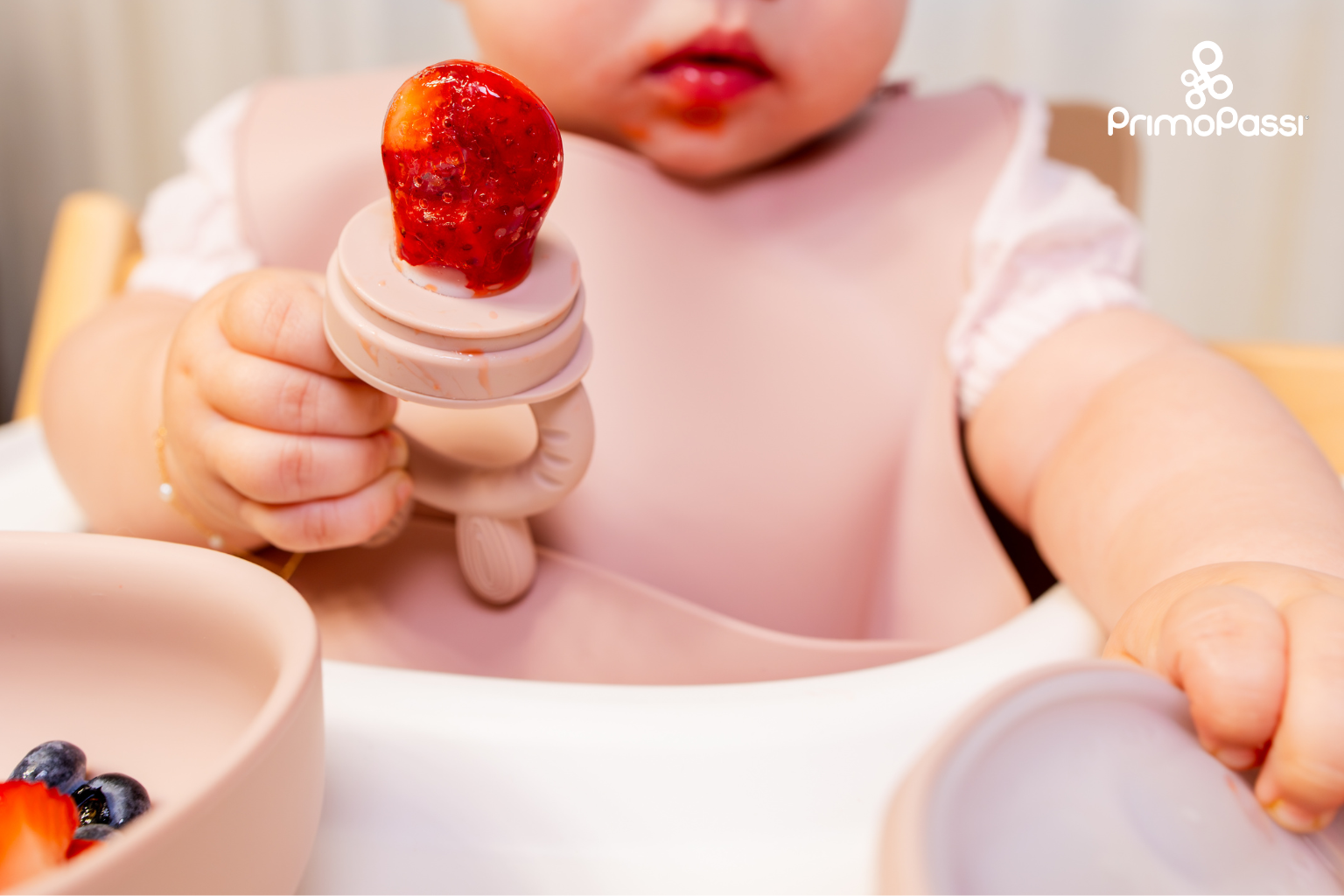
A frozen food feeder for teething takes this one step further. Instead of a plain teething ring, baby gets the combined benefit of cold, gentle counter-pressure from the silicone or mesh, and the taste and nutrition of real food. Many parents find their baby chews longer and more contentedly on a frozen feeder than on a teether alone, simply because there's flavor involved.
There's also a practical upside beyond comfort. A frozen feeder gives baby something productive to do with their hands and mouth during a fussy stretch, which can buy a parent a few calm minutes to finish making dinner or tend to an older sibling. Because the feeder does the work of containing the food, it's one of the few teething tools that doubles as an actual snack, rather than just a chew toy.
Building a Simple Feeding and Teething Routine
Many parents find it easiest to treat the feeder and freezer tray as one system rather than two separate items. A batch-prep routine once or twice a week means there's always something ready when teething flares up unexpectedly, usually in the late afternoon or right before bedtime, when babies tend to be more overtired and less tolerant of discomfort.
A simple weekly rhythm looks like this: pick one or two days to puree a handful of fruits or vegetables baby already tolerates, portion them into the freezer tray, and freeze everything at once. From there, a frozen portion can go straight into the food feeder any time it's needed, with no extra prep in the moment. Rotating between two or three flavors also keeps things interesting for baby, rather than reaching for the same frozen banana every single day.
What Is a Food Feeder and How Does It Work for Teething
A silicone food feeder is a small pouch, usually shaped like a pacifier or handle-and-net design, that holds soft or frozen food inside a fine mesh or silicone sac. Baby sucks and chews on the outside while tiny amounts of the food's flavor and juice pass through, without any risk of a chunk breaking off and becoming a choking hazard. This is what makes feeders different from handing a baby a whole piece of frozen fruit or a raw carrot: the food is always contained.

The Primo Passi Silicone Food Feeder uses a soft, food-grade silicone sac with fine slits instead of a mesh net, which makes it easier to clean and less likely to trap bits of food than traditional mesh feeders. The handle is sized for small hands, so baby can hold and direct the feeder independently once they have enough grip strength, usually somewhere around 6 to 9 months.
Because the feeder controls how much food comes through, it works for a wide range of foods and textures: soft cooked fruit, steamed vegetables, yogurt, or even breast milk and formula frozen into small cubes. This flexibility is part of why feeders are popular both for introducing new tastes and for soothing sore gums.
What to Freeze in a Silicone Freezer Tray for Teething Relief
Freezing food ahead of time turns an ordinary feeder session into a teething remedy. A silicone freezer tray with small, individual compartments lets parents portion out single servings of purees or soft foods, freeze them solid, and then pop one out whenever baby needs relief, without prepping anything fresh in the moment.

The Primo Passi Silicone Carrot Freezer has carrot-shaped compartments with a snap-on lid, so purees can go straight from the blender into the tray, into the freezer, and later into a food feeder without dirtying extra dishes. The silicone flexes easily, which makes popping out a frozen portion simple even with one hand, useful when the other hand is holding a fussy baby.
Good options to freeze for teething relief include:
- Pureed banana or avocado, which freeze to a soft, easy-to-suck texture
- Steamed and pureed apple, pear, or sweet potato
- Plain whole-milk yogurt, once baby has started dairy
- Breast milk or formula, frozen into small cubes for a familiar, soothing flavor
- Watermelon or cucumber puree, which are naturally very cold and refreshing once frozen
Avoid freezing anything with added sugar, honey (never appropriate under 12 months due to the risk of infant botulism, per CDC guidance), or foods baby hasn't already tried in a fresh form. Introduce a new food fresh first to watch for any reaction before freezing a batch of it.
How to Safely Prepare Frozen Food for a Feeder
Getting the texture and temperature right matters as much as choosing the food itself. A few steps make the process both safer and more effective:
- Puree or mash the food until smooth, with no chunks that could break off inside the feeder
- Portion it into a silicone freezer tray in small amounts, roughly one to two tablespoons per compartment
- Freeze for at least four hours, or until solid all the way through
- Pop out one frozen portion and load it directly into the silicone food feeder
- Let the frozen food sit at room temperature for two to three minutes before handing it to baby, so it isn't painfully cold or hard against sensitive gums
It helps to freeze several portions at once during a quiet moment, like nap time, so a soothing frozen feeder is always ready when a teething flare-up strikes.
How Long Should Baby Use a Frozen Food Feeder
Most pediatric feeding guidance suggests limiting any single feeding or teething session to 10 to 15 minutes of active chewing. This is long enough to provide relief without over-tiring baby's jaw or leading to excessive intake of any one food. Always stay within arm's reach while baby uses a feeder, and stop the session if baby seems tired, distracted, or starts pulling the feeder in unusual ways.
Safety Tips for Feeder and Frozen Food Use
- Inspect the silicone or mesh before every use for tears, holes, or loose parts
- Never leave a baby unsupervised while using a food feeder, frozen or otherwise
- Wash the feeder thoroughly with warm soapy water after each use, and allow it to air dry completely to prevent mold in mesh netting
- Replace the feeder if the material becomes discolored, sticky, or develops a lingering odor
- Avoid freezing whole or chunked foods directly, since these can crack unpredictably and pose a choking risk if a piece separates
The World Health Organization recommends that infant feeding tools be cleaned and sanitized regularly, particularly in the early months when a baby's immune system is still developing (WHO, 2021).
When Can Babies Start Using a Frozen Food Feeder
Food feeders are generally appropriate once a baby has started solid foods, which the AAP recommends introducing around 6 months, though some babies show readiness signs closer to 4 months (HealthyChildren.org, 2023). Since teething and the start of solids often overlap, many parents introduce a food feeder around the same time as first purees, using it both to explore new tastes and to ease teething discomfort. Always check with a pediatrician before starting solids or introducing frozen textures, especially if baby was born prematurely or has a diagnosed feeding difficulty.
Signs Your Baby Might Benefit From a Frozen Food Feeder
Common indicators that a frozen feeder could help include increased drooling, chewing on hands or toys more than usual, irritability that spikes in the late afternoon or evening, and visible or palpable swelling along the gum line. Not every fussy stretch is teething, but when these signs cluster together, a cold food feeder is often one of the gentlest ways to bring relief.
It's worth noting that persistent high fever, diarrhea, or a rash are not typical teething symptoms, despite being commonly attributed to it. HealthyChildren.org points out that these signs usually point to something else going on and are worth mentioning to a pediatrician rather than waiting them out (HealthyChildren.org, 2023). A frozen food feeder is meant to ease normal teething discomfort, not to substitute for medical guidance when something seems off.
Feeder Textures as Baby Grows
As baby moves from early purees toward more textured foods, the same feeder can grow with them. In the early weeks of solids, a smooth puree frozen solid gives the most control and the least mess. A few months later, once baby is comfortable with thicker textures, a soft mashed food with small soft lumps can go into the feeder for a bit more chewing practice, still without any choking risk since the mesh or silicone continues to do the containing. This gradual progression mirrors the way pediatric feeding guidance recommends introducing texture over time, rather than jumping straight from smooth purees to table food.
Frequently Asked Questions
What age can babies use a food feeder for teething?
Most babies can start using a food feeder around 4 to 6 months, once they've begun solid foods or a pediatrician has confirmed readiness. Always supervise the first several sessions closely.
Can you freeze breast milk in a food feeder?
Yes. Breast milk can be frozen into small cubes using a silicone freezer tray and then loaded into a food feeder. Many babies find the familiar taste especially soothing during teething, since it combines comfort with cold relief.
Is it safe to freeze fruit directly in a food feeder?
It's safer to puree or mash fruit before freezing rather than freezing whole or chunked pieces. Chunks can crack unpredictably and create a choking risk if a fragment breaks off inside the feeder.
How long can a baby chew on a frozen food feeder?
Most sessions should last around 10 to 15 minutes. Stay within arm's reach the entire time, and end the session earlier if baby seems tired or distracted.
What foods should never go in a frozen food feeder?
Avoid honey for babies under 12 months due to the risk of infant botulism, along with any food baby hasn't already tolerated fresh. Skip foods with added sugar or salt as well.
How do you clean a silicone food feeder after use?
Wash it with warm, soapy water after every use and let it air dry fully before storing. Check the silicone or mesh for tears or wear each time, and replace the feeder if it becomes discolored or develops an odor.