
Quick Answer: The hardest part of night feeds usually isn't the feeding itself, it's what happens afterward. Flipping on a bright overhead light to feed or change your baby can suppress melatonin and make it harder for both of you to fall back asleep. A soft, dim night light lets you see what you're doing without fully waking your baby's body clock. Pairing that light with a calming sound, like the Primo Passi Portable Baby White Noise Machine, and repeating the same simple steps every night helps your baby learn that a feed is just a quiet pause in sleep, not the start of playtime.
If you're a mom working on your baby's sleep routine, night feeds are probably the part that feels hardest to get right. You want to feed your baby quickly and gently, then get everyone back to sleep without a full wake-up. A baby night light for night feeds is one of the simplest tools for making that happen, and it works best when it's part of a routine you repeat every night, not just a lamp you happen to have in the room.
Why Night Feeds Are Tough on Sleep, Not Just on You
In the newborn stage, babies typically wake to feed every two to three hours, which adds up to eight to twelve feeds in a 24 hour stretch. That frequency usually starts to ease around three to four months, and by six months many babies can go six to eight hours without needing to eat. Every baby is different, and growth spurts, teething, or illness can bring night wakings back even after they've started to settle.
What makes those wakings harder than they need to be is often the lighting, not the feeding. Research on preschool age children found that even brief, dim light exposure before or during a normal sleep period suppressed melatonin by 70 to 99 percent, and light intensity didn't matter nearly as much as whether the light was on at all. Babies are thought to be even more sensitive to light than older children, since their eyes let in more of it. Turning on a bright bedroom or hallway light for a two in the morning feed can be enough to reset the body's signal that it's time to be awake, which is exactly the opposite of what you want at that hour.
How a Soft Night Light Changes What Happens at 2 AM
A dim, warm toned light gives you enough visibility to check a latch, see how much is left in a bottle, or change a diaper, without the jolt of a ceiling light or a phone flashlight. The goal isn't total darkness. HealthyChildren.org, the American Academy of Pediatrics' parent resource, notes that a safe, calm sleep space matters as much overnight as it does at bedtime, and a soft light that stays low and steady supports that without turning the room bright.
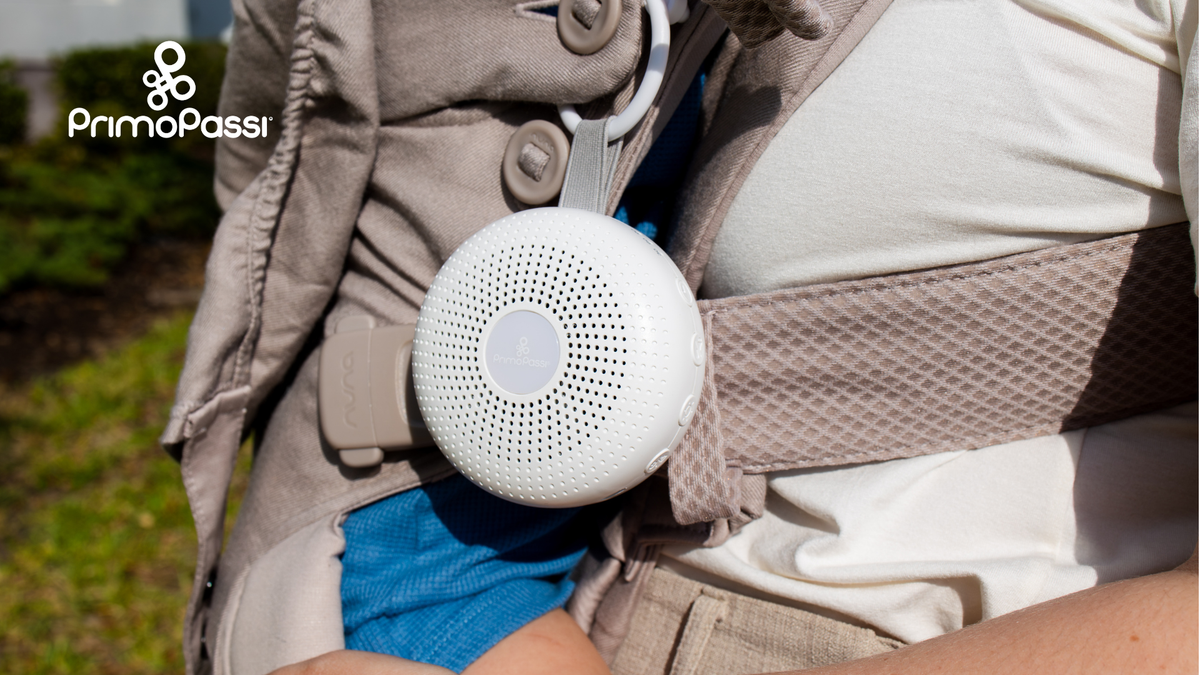
This is where a portable option has an advantage over a plug in nightlight fixed to one wall. The Primo Passi Portable Baby White Noise Machine clips onto the crib rail, so the light is right where you're already standing for the feed, not across the room. It also clips onto a stroller or car seat, which matters if your baby naps or feeds on the go and you want the same soft glow and sound wherever you are.

The Primo Passi Portable Baby White Noise Machine combines a soft, adjustable night light with 30 white noise, lullaby, and nature sounds in one clip-on device. It also has smart cry detection, so if your baby starts to fuss between feeds, it can pick up the sound and start playing a soothing tone on its own, which sometimes settles them back down before you even need to get up. A built-in child lock keeps the settings from getting bumped overnight, and it recharges with USB-C so it's ready for the next round of night feeds.
Building a Night Feed Routine Your Baby Can Learn
Babies don't sleep through the night because you get lucky, they sleep through the night because their body and brain learn what usually happens next. A predictable pattern around feeds helps that learning happen faster. The routine itself matters more than any single product, but a consistent light and sound cue gives your baby's brain something reliable to associate with "this is a quiet feed, not wake up time."
A simple four step pattern to repeat
Keep the steps short and identical every night:
- Turn on only the soft night light, skip the overhead light entirely.
- Keep the room quiet or let a low white noise sound continue playing in the background.
- Feed and change your baby with minimal talking and no bright screens nearby.
- Turn the light back down (not off, if your baby startles in full darkness) and return your baby to the crib while still drowsy rather than fully asleep.
Repeating those same four steps, in the same order, every single night feed, is what turns a night light into part of a routine instead of just a gadget in the nursery.
What to Look For in a Night Light for Night Feeds
Not every night light is built with feeds in mind. A few features make a real difference at three in the morning:
- Adjustable brightness. You want enough light to see clearly, but low enough that it doesn't fully wake anyone up.
- Portability. A light that clips onto the crib, stroller, or car seat travels with your routine instead of forcing you to recreate it in every room.
- A calming sound option. White noise or a lullaby can help mask household noise that might otherwise startle a baby who is just drifting back off.
- An auto-off timer, so the light and sound don't run all night once your baby has settled.
- A secure clip and child lock, so a half-asleep hand can't accidentally change the settings.
A device that checks all of those boxes, like the Primo Passi white noise machine, means you're not juggling a separate lamp, sound machine, and stroller clip. Fewer pieces to manage at 3 a.m. usually means an easier feed for both of you.
When Do Night Feeds Start to Taper Off
Most newborns need to feed every two to three hours around the clock in the first few weeks. By around three months, many babies stretch that to once or twice a night, and by six months, a large share of babies can go six to eight hours without a feed. Growth spurts, teething, and minor illnesses can temporarily bring night wakings back even after your baby has started sleeping longer stretches, which is normal and usually passes on its own. A steady night feed routine tends to make those bumps easier to ride out, since your baby already knows what a quiet nighttime feed looks and feels like.
Frequently Asked Questions
What is the best night light color for night feeds?
Warm, dim tones like soft amber or red are generally considered gentler on a baby's developing circadian rhythm than bright white or blue toned light, since blue wavelengths have a stronger effect on suppressing melatonin.
Should I turn on a bright light to check my baby during a night feed?
It's best to avoid it. A bright overhead light or phone flashlight can suppress melatonin and make it harder for your baby to settle back to sleep after the feed. A soft, dim night light is usually enough to see what you need to see.
How often do newborns wake up to feed at night?
Most newborns wake every two to three hours, which works out to roughly eight to twelve feeds a day. That frequency generally starts to space out around three to four months of age.
Can a white noise machine help with night feeds specifically?
Yes. A white noise machine can mask household sounds that might otherwise fully wake a drowsy baby during or after a feed, and features like cry detection can help soothe a baby back to sleep between feeds without you needing to get up every time.
Is it safe to use a night light in the crib area?
A soft, low intensity night light placed near the crib, rather than inside it, is generally considered safe. Keep cords, clips, and any device out of reach of your baby's hands and face, and follow the manufacturer's placement instructions.
When can I expect my baby to stop needing night feeds?
Many babies can go six to eight hours without a feed by around six months old, though this varies a lot from baby to baby. Growth spurts and teething can temporarily bring night wakings back even after a baby has started sleeping longer stretches.